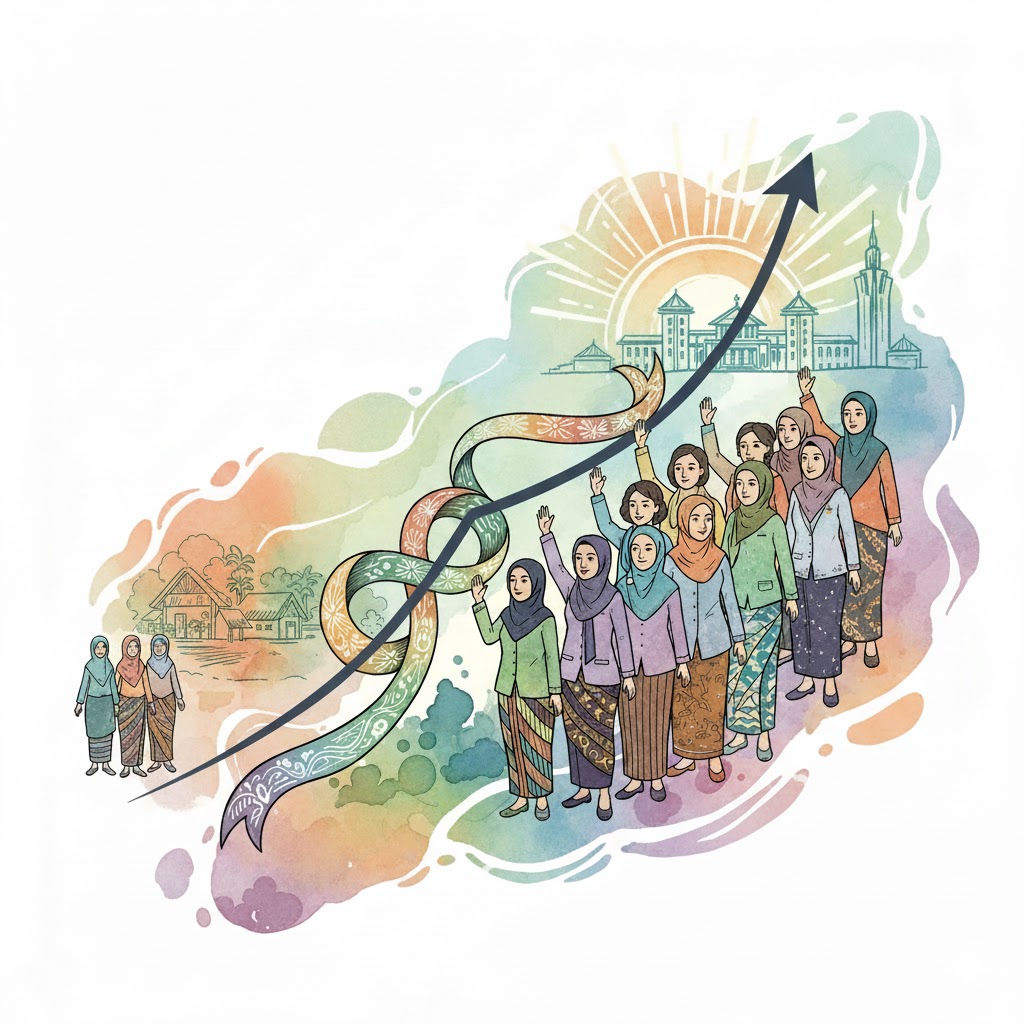
The Dynamics of Women’s Representation in Legislative Elections 2014–2024 in West Lombok Regency
Abstract
Women’s representation in legislative institutions is a crucial indicator of democratic quality and gender equality. The Indonesian state has adopted affirmative action policies mandating a minimum quota of 30 percent women in legislative candidate lists. However, the implementation of this policy has not fully translated into an increased number of women elected to legislative bodies. This article aims to analyze the dynamics of women’s representation in legislative elections in West Lombok Regency during the 2014–2024 period and to identify the factors influencing these dynamics. This study employs a qualitative approach using a case study method. Data were collected through observation, interviews, and official documentation from the West Lombok Regency General Election Commission. The findings indicate that women’s representation in the West Lombok Regional House of Representatives has fluctuated and shows a gradual quantitative increase, yet remains far below the ideal level of representation. Major obstacles include the persistence of patriarchal culture, weak political party cadre formation and recruitment, limited economic and political resources among female candidates, and social as well as religious stigma that frames politics as a masculine domain. This article argues that fulfilling candidate quota requirements does not automatically ensure substantive representation of women in legislative institutions.
Keywords: women’s representation, legislative elections, gender politics, West Lombok